

History
Kintsugi (金継ぎ or "golden joinery") is an extension of the Japanese philosophy wabi-sabi (侘寂) which recognizes the beauty in the impermanence and simplicity. In other words, the fractures on a ceramic bowl don't represent the end of that object's life, but rather an essential moment in its history. The flaws aren't hidden, instead they are intentionally illuminated. Ernest Hemingway: "The world breaks everyone and afterward many are strong in the broken places." The reality is, repair requires transformation. The true shape of us is often impossible to fully see until it's fractured.
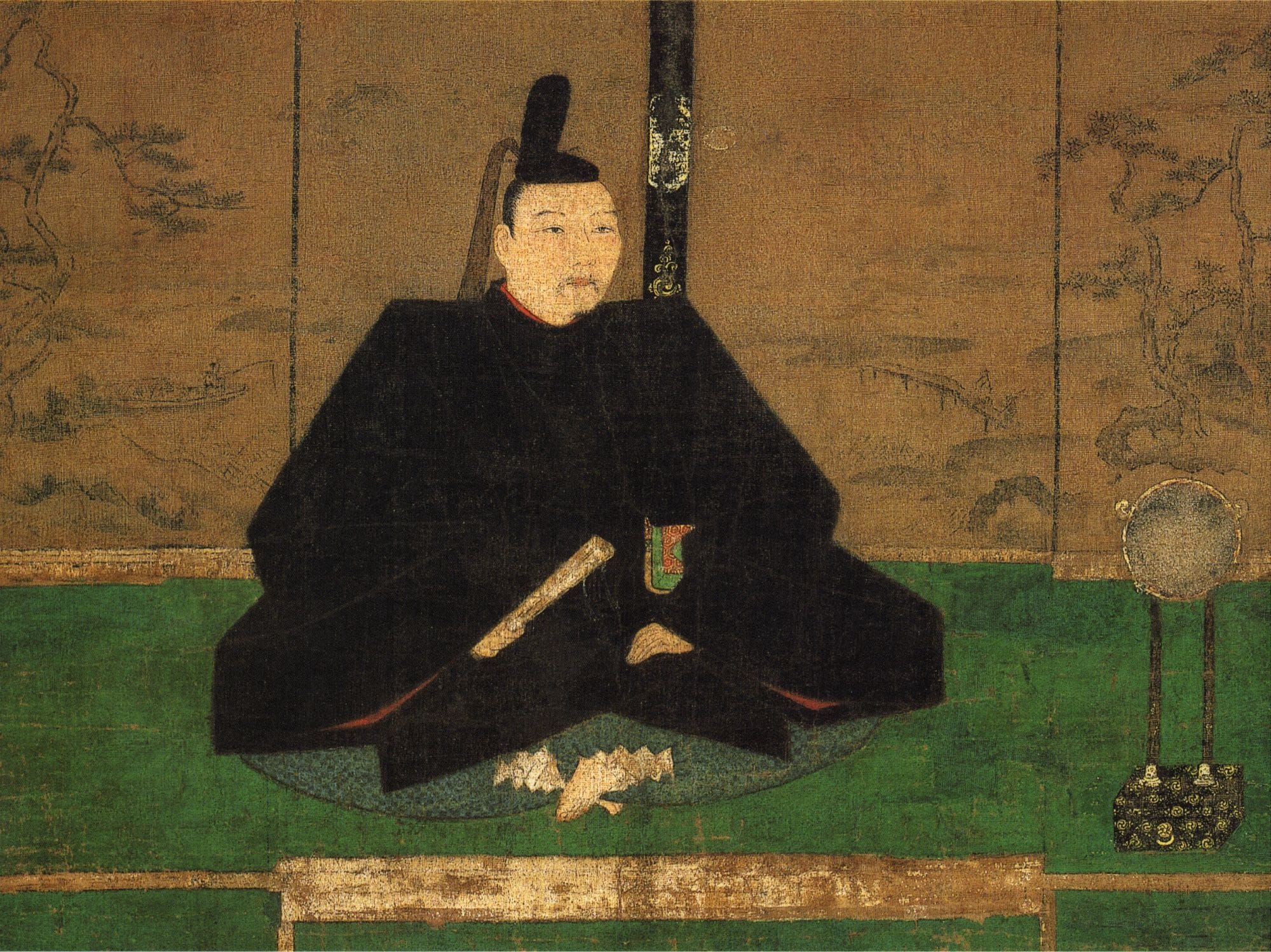
It is said that the history of Kintsugi originated in the 15th century with the Japanese military commander, Shogun Ashikaga Yoshimasa. Reportedly Yoshimasa had broken one of his prized Chinese tea bowls, so he sent it to one of the most skillful Chinese ceramic repairmen.
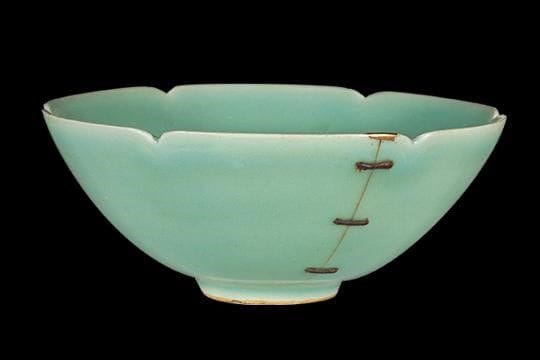
However, at the time the process for repairing broken pottery was to use iron braces to sew the fractures. It makes the piece durable and solid again, but it harmed the ceramic, given that it requires holes made in it for the braces to pass through.
Yoshimasa was disappointed with the repair and sought to find a new way. Eventually, the cup was repaired using a local tree sap and then covered with gold dust. Not only was the cup repaired, but it had been given new life (transformed). The imperfections were made more visible, not only illuminating beauty, but making it unique and more valuable.
Kintsugi Methods
Authentic Japanese Method
In Japan, the traditional method of kintsugi employs a natural lacquer from the sap of urushi trees and there is use of genuine gold powder.
The urushi tree Toxicodendron vernicifluum is in the same genus as poison ivy, poison oak, and poison sumac because it secretes sap containing an allergenic compound called urushiol that some individuals may be sensitive to in its liquid and vapor forms. Once it hardens, however, the sap is much less potent and does not generally cause allergic reactions.
This sap is filtered, heat-treated, and mixed with a binding agent like rice or flour to form a lacquer which adheres the pieces back together. It is then dusted or mixed with the gold powder to highlight the break lines.
Where this method uses urushi and genuine gold powder, the materials are much more expensive. It also requires a very particular natural or controlled environment in order for the curing process to happen appropriately. A project using the traditional method can take months to complete.
For the sake of keeping classes more affordable and time sensitive, I teach a modernized version of kintsugi (Gold Flush method) with materials which are more easily accessible within the US.
Gold Relief Method
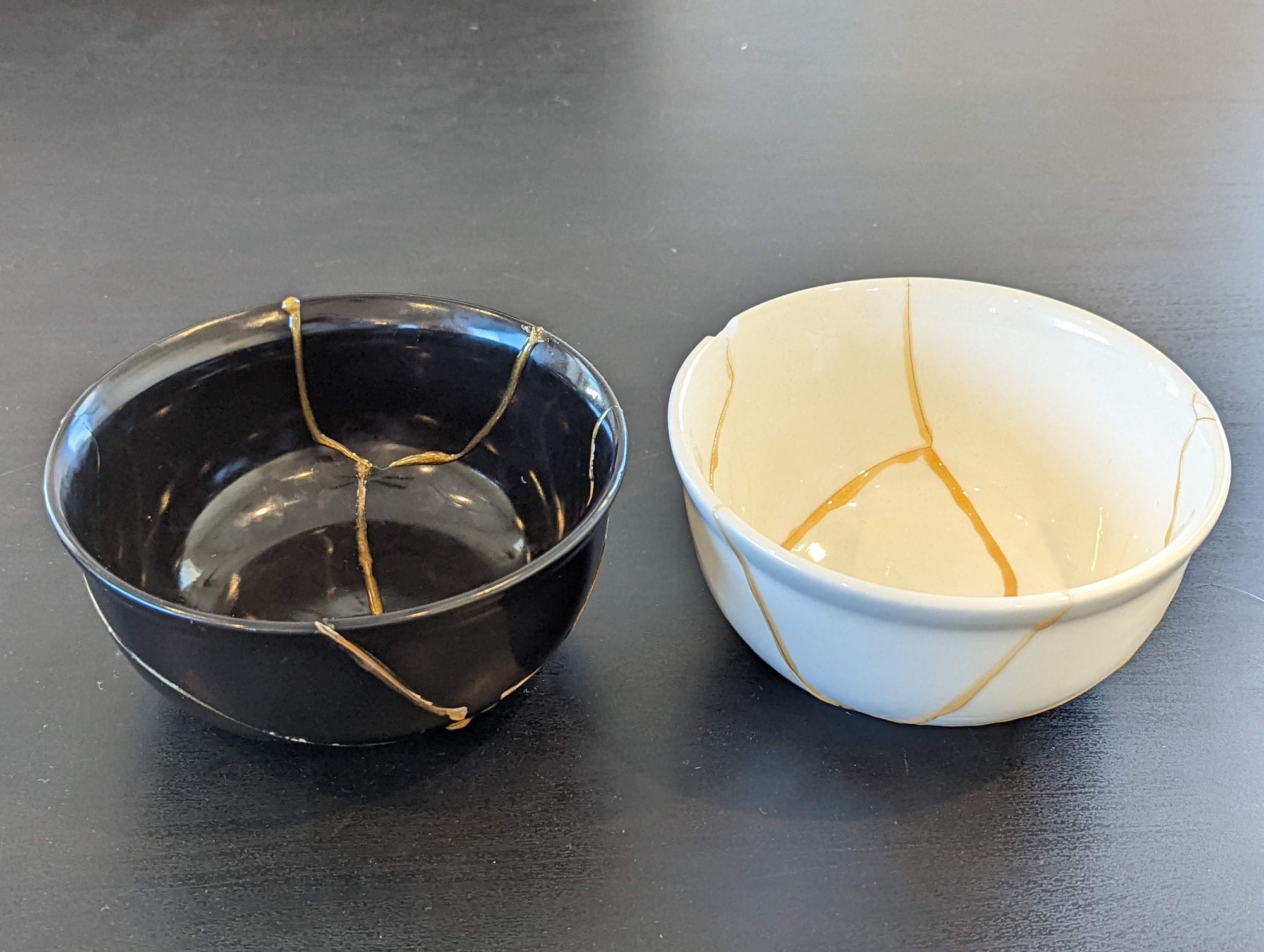
Many kintsugi classes in the US are using what's called the Gold Relief method. This technique is popular due to its simplicity. An epoxy glue mixed with a gold dust powder is used to adhere pieces. The glue is intentionally over-applied and allowed to ooze through the cracks to illuminate the breakages.
This method can be preferred when there is not enough time or tools available for other methods, but my classes do not generally cover this method. I prefer to use what's called the Gold Flush technique instead.
Gold Flush Method
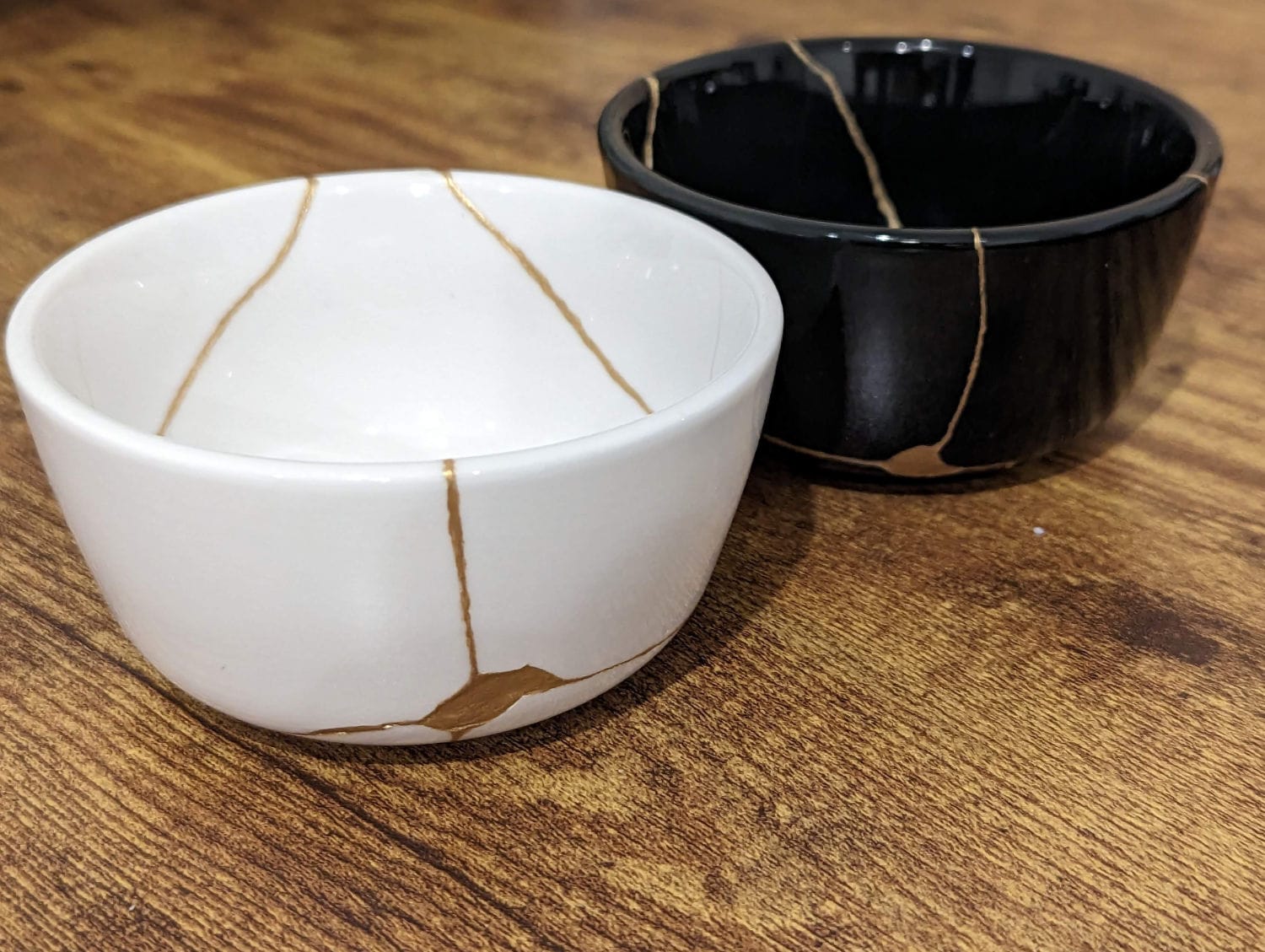
With the Gold-Flush method, instead of mixing gold colored powder with the epoxy, gold pigmented paint is used for illumination. Participants can choose to either use a minimal amount of epoxy so that the repairs are more flush with the surface, or intentionally allow it to partially seep out to create more of a raised-scar appearance. In addition to adhering the broken pieces, this technique utilizes plaster to fill in chips and holes so that the pieces will set with a more flush alignment to the original shape.
In my classes, along with repairing the vessel, we intentionally break and discard a small portion of the bowl if necessary. This allows us the opportunity to learn to recreate that portion.
This technique does take more time and will require a couple extra materials including clay and plaster. To allow appropriate time for setting, this method is a multi-day process. I also offer a simplified version of this method which can be taught within one sitting. See classes for more information about what I teach.